Calvin: A Modern Script Font for Polished, Personal Branding
Finding a script font that feels both contemporary and timeless can be a real challenge for designers and business owners. You want something with personality that doesn’t sacrifice legibility, and elegance that doesn’t feel stuffy. This is where Calvin, a modern monoline script font, enters the conversation. It’s not just another decorative typeface; it’s a thoughtfully crafted design asset that balances creative flair with practical application, making it a valuable addition to any designer's toolkit or a small business's brand identity system.
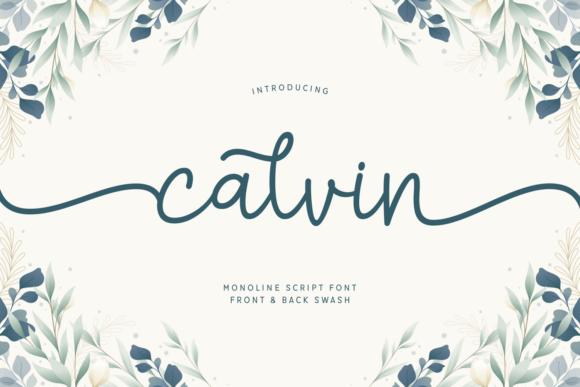
At its core, Calvin is defined by its smooth, continuous strokes and a minimalist aesthetic. The monoline weight—meaning the stroke width remains consistent throughout each letterform—gives it a clean, contemporary feel. This consistency is key to its versatility. Unlike highly ornate or variable-width calligraphic scripts that can overwhelm a layout, Calvin maintains a harmonious rhythm. Its defining features are the elegant front and back swashes. These aren’t just afterthoughts; they are integral to the font's character, adding a polished, bespoke finish to headlines, logos, and prominent text. The swashes provide a gentle flourish that catches the eye without disrupting the natural flow of the words, achieving that "perfectly polished finish" that elevates a design from good to memorable.
Where Calvin Truly Shines: Practical Applications
Understanding a font's personality is one thing; knowing where to deploy it effectively is another. Calvin’s balanced weight and natural flow make it exceptionally readable for a script font, which opens up a wide range of applications beyond just logos. Its style leans into a soft, organic aesthetic, making it a perfect match for specific industries and creative projects.
For wedding stationery, Calvin is a natural fit. Its elegance conveys romance and sophistication, while the modern monoline style keeps it feeling fresh and current. Think save-the-dates, invitation headers, menu cards, and thank-you notes. It pairs beautifully with clean sans serif fonts for the body text, creating a visual hierarchy that is both beautiful and easy to follow for guests.
In the realm of soft branding and lifestyle blogs, Calvin helps build a brand identity that feels approachable yet professional. A wellness coach, a boutique bakery, or a travel blogger can use it for their primary logo or wordmark to instantly communicate a sense of care, creativity, and personal touch. The font’s legibility also makes it suitable for subheadings and pull quotes on websites, enhancing the editorial design without compromising readability for longer passages.
For organic product packaging, Calvin’s aesthetic is a powerful tool. It suggests authenticity, craftsmanship, and attention to detail. Imagine it on labels for artisanal foods, handmade cosmetics, or sustainable goods. It works exceptionally well on packaging design where space is limited, as a single, well-placed word in Calvin can establish the product's entire personality. It’s also a strong contender for social media graphics, where a quick, stylish headline can stop the scroll and reinforce brand recognition.
Making Calvin Work in Your Design System
Choosing a creative font like Calvin is just the first step. Integrating it effectively into your broader design system requires some practical consideration. The goal is to leverage its strengths while maintaining overall cohesion and professionalism.
Font Pairing is Critical. Calvin is a display font at heart. Its primary role is to attract attention and convey mood. Therefore, it should almost always be paired with a highly legible sans serif font or a classic serif font for body copy. A pairing with a geometric sans serif like Montserrat or a humanist sans serif like Lato creates a clean, modern contrast. For a more traditional or literary feel, a serif like Garamond or a transitional serif like Baskerville can provide beautiful counterbalance. The key is to let Calvin be the star in headlines and logos, while its partner font handles the heavy lifting of paragraphs and smaller text.
Evaluate Readability in Context. While Calvin is more legible than many script fonts, its suitability for small text or long-form reading is limited. Always test it at the intended size and in the intended environment. It’s perfect for a hero banner on a website, a book title on a cover, or a heading on a poster. However, for body text in a blog post, a user interface, or fine print in legal documents, you should switch to your paired sans serif or serif. This practice not only ensures accessibility but also reinforces visual hierarchy, guiding the reader’s eye naturally.
Review the Full Character Set. Before committing, explore the font’s complete offerings. A premium font like Calvin often includes stylistic alternates, additional swashes, ligatures, and extensive language support. These extras are not just decorative; they provide flexibility. Alternates can help you customize a logo to avoid awkward letter combinations, while ligatures can make certain letter pairs flow more smoothly. Understanding these features allows you to use the typeface to its full potential and avoid limitations down the road.
Consider Commercial Licensing. For any project that goes beyond personal use—whether it’s for a client, a product for sale, or a business website—ensuring you have the correct commercial license is non-negotiable. Reputable font foundries and marketplaces provide clear licensing terms. Using a font without the proper license can lead to legal and financial repercussions, so treat this as a standard part of your design assets procurement process.
Ultimately, Calvin is more than just a pretty script. It’s a versatile modern typography tool that, when used thoughtfully, can add a gentle touch of class and personality to a wide array of projects. It excels where a human, crafted feel is desired without sacrificing contemporary style or readability. By focusing on strategic pairing, contextual use, and leveraging its full feature set, designers and entrepreneurs can use Calvin to build stronger, more engaging brand identity systems and creative works.